

Insulator
What Is an Insulator?
An insulator is a material through which electric current does not flow freely. Insulative materials have high electrical resistance and are used to prevent unintended current flow.
Common insulating materials include:
Glass
Rubber
Air
Ceramics
Many plastics
Insulators are critical for protecting equipment and personnel from electrical hazards and for maintaining proper separation between energized components.
How Insulators Work
Electric current flows easily through conductive materials because they contain free electrons. Insulators, by contrast, tightly bind their electrons, making it difficult for current to pass.
High Resistance
Insulators limit current flow by presenting high electrical resistance.
Electrical Separation
They prevent energized conductors from contacting other conductive materials.
Safety Protection
Insulation reduces the risk of shock and arc faults.
Insulators in Electrical Systems
Insulators are used throughout electrical systems in multiple forms:
Cable Insulation
Surrounds conductors to prevent short circuits.Busbar Supports
Maintain separation between energized components.Transformer and Switchgear Insulation
Protect internal components and maintain dielectric strength.High-Voltage Insulators
Used on transmission and distribution systems to support overhead conductors.
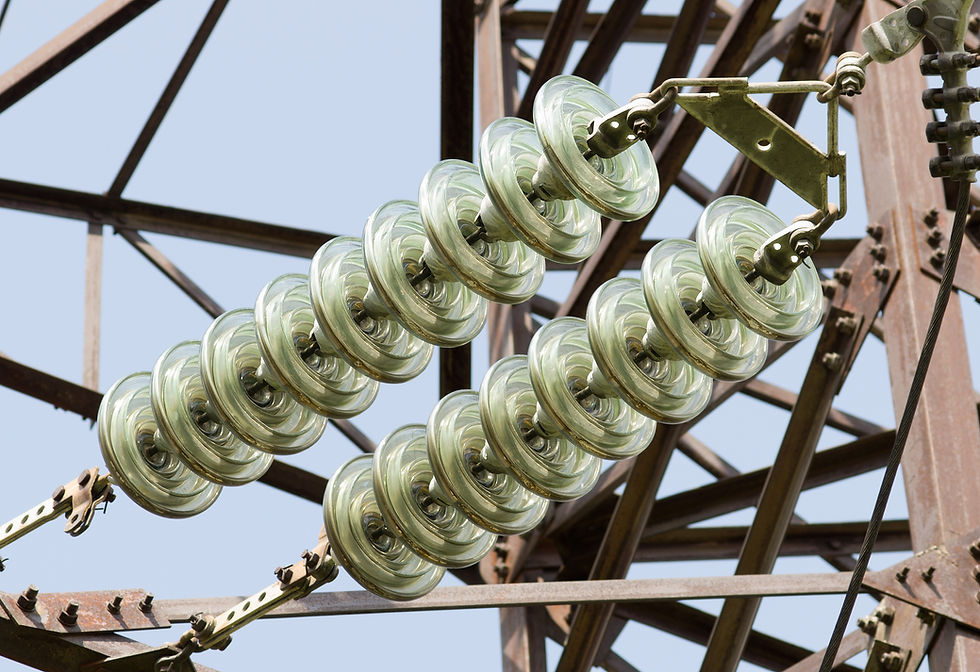
A photo of an insulator
Insulators Across Enercon-Supported Industries
Data Centers
Data centers rely on insulated conductors and switchgear assemblies to protect sensitive IT equipment and ensure safe power distribution within high-density electrical environments.
Military and Defense
Defense installations depend on durable insulation systems within hardened power distribution infrastructure to maintain safety and reliability under demanding conditions.
Oil & Gas
Oil and gas facilities operate in harsh environments where robust insulation systems are essential to prevent faults and protect personnel from electrical hazards.
Mining
Mining operations use heavy electrical equipment in rugged environments where insulation integrity is critical for safety and system reliability.
Healthcare Facilities
Hospitals require high-quality insulation in electrical systems to reduce shock risk and support life-safety infrastructure.
Green Energy
Renewable energy systems, including wind and solar installations, rely on insulated conductors and components to maintain safe grid integration and system performance.
Why Insulation Matters
Prevents unintended current flow
Protects personnel from electric shock
Reduces risk of short circuits and arc faults
Maintains system separation and stability
Supports high-voltage system safety
Insulation in Engineered Power Systems
Proper insulation selection and coordination are essential in electrical distribution system design. Engineers must account for voltage levels, environmental conditions, and dielectric strength when specifying insulating materials.
Enercon designs and integrates electrical distribution systems with carefully engineered insulation strategies within custom switchgear, bus systems, and power assemblies. This approach supports safe and reliable operation across mission-critical environments, including data centers, defense installations, oil and gas operations, mining facilities, healthcare institutions, and renewable energy sites.