
Series-Parallel Circuit
What Is a Series-Parallel Circuit?
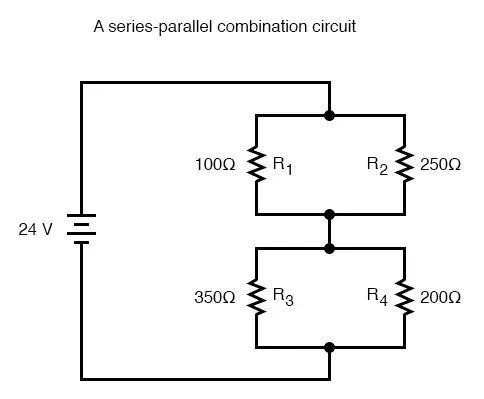
A series-parallel circuit is an electrical circuit in which some components are connected in series while others are connected in parallel.
This combination allows engineers to design circuits that balance voltage distribution and current flow based on system requirements.
It is one of the most common circuit configurations used in real-world electrical systems.
How a Series-Parallel Circuit Works
A series-parallel circuit contains two types of connections:
Series sections where components share the same current path
Parallel sections where current can flow through multiple paths
In this type of circuit:
Voltage is shared across components in series
Current is divided among branches in parallel
Total resistance depends on both configurations combined
This makes analysis more complex than purely series or purely parallel circuits.
Key Characteristics
Series-parallel circuits provide flexibility in electrical design.
Multiple Current Paths
Parallel sections allow current to split across different branches.
Controlled Voltage Distribution
Series sections divide voltage across components.
Custom Resistance Levels
Engineers can design circuits to achieve specific resistance and load behavior.
Improved Reliability
If one branch fails in a parallel section, other branches may continue operating.

Photo of a Series-Parallel Combination Circuit
Where Series-Parallel Circuits Are Used
Most real-world electrical systems use a combination of series and parallel connections.
Examples include:
Electrical distribution systems
Control panels and automation systems
Lighting and building systems
Power distribution networks
Industrial equipment
Series-Parallel Circuits Across Enercon-Supported Industries
Manufacturing
Manufacturing facilities use series-parallel circuits in control panels, automation systems, and production equipment.
Oil & Gas
Oil and gas operations rely on complex electrical systems where mixed circuit configurations support reliability and control.
Data Centers
Data centers use series-parallel configurations in power distribution and backup systems to ensure redundancy and efficiency.
Healthcare Facilities
Hospitals depend on electrical systems designed with multiple circuit paths to maintain critical operations.
Commercial Facilities
Commercial buildings use series-parallel circuits in lighting, HVAC systems, and building automation systems.
Wastewater
Wastewater treatment plants use mixed circuit configurations in pumps, control systems, and monitoring equipment.
Circuit Design in Engineered Electrical Systems
Modern electrical systems rarely rely on a single type of circuit configuration. Instead, engineers use combinations of series and parallel circuits to optimize performance, efficiency, and reliability.
Enercon designs and integrates electrical distribution systems that support reliable and efficient power delivery across complex environments. Through engineered switchgear and integrated power solutions, Enercon helps organizations maintain stable electrical infrastructure across mission-critical facilities including manufacturing plants, oil and gas operations, data centers, healthcare institutions, commercial infrastructure, and wastewater systems.