
Power Infrastructure for Data Centers: A Complete Guide

Why Power Infrastructure Is Critical in Data Centers
How do data centers get power? What powers a data center? How is data center power managed?
Those questions sound simple, but the answer involves far more than a utility connection. In a data center, power infrastructure is the foundation that supports every server, cooling system, and critical operation inside the facility.
Unlike conventional buildings, data centers cannot afford interruptions. Even a brief outage can lead to revenue loss, system disruption, and operational risk. That is why power infrastructure is designed not just for supply, but for reliability, redundancy, and scalability.

What Is Data Center Power Infrastructure?
Data center power infrastructure refers to the systems that generate, manage, distribute, and protect electrical power to ensure continuous operation of IT equipment and supporting systems.
It is not a single system. It is a connected network that supports the full power lifecycle, from utility service and backup power to switchgear, UPS systems, and final distribution to server racks. In short, it is the electrical backbone that keeps a data center running.
Why It Matters
Power infrastructure matters because every other system depends on it.
Uptime Requirements
Many data centers are built around extremely high availability targets, often called five nines uptime. In those environments, even seconds of downtime can have serious consequences. Power systems must be able to respond immediately and continue operating under adverse conditions.
Increasing Power Demand
Modern facilities are carrying heavier loads than ever before. AI workloads, high-density racks, and hyperscale expansion are all increasing demand on data center electrical systems. Infrastructure must be designed to handle today’s load while supporting future growth.
Risk Mitigation
In a data center, power failure quickly becomes system failure. That is why critical power systems are designed to eliminate single points of failure and reduce risk through layered protection and backup.
Core Components of Data Center Power Infrastructure
Several systems work together to maintain reliable power across the facility.
Utility Power and Substations
Power begins with the grid. Utility power enters the site and is transformed as needed through substation equipment before it moves into the facility’s internal electrical infrastructure.
Switchgear
Switchgear controls, protects, and distributes power throughout the data center. It plays a central role in routing electricity safely and isolating faults when problems occur.
Uninterruptible Power Supply (UPS)
UPS systems provide immediate backup power when utility service is interrupted. They bridge the gap between power loss and generator startup, helping prevent even momentary outages.
Backup Generators
Generators provide long-duration backup power during an outage. Once utility power fails, they start automatically and sustain operations until normal service is restored.
Power Distribution Systems
After power is conditioned and protected, it must be delivered to the equipment that uses it. That happens through power distribution units, busways, and rack-level delivery systems that carry power throughout the facility.
How Power Flows Through a Data Center
While designs vary, the power path usually follows a clear sequence.
Step 1: Power Enters from the Grid
Electricity enters the site from the utility provider and passes through transformation equipment to prepare it for use inside the facility.
Step 2: Power Is Managed by Switchgear
Switchgear routes the incoming power and protects the system from faults and abnormal conditions.
Step 3: UPS Provides Immediate Backup
If utility power is interrupted, the UPS responds instantly to keep critical loads online without disruption.
Step 4: Generators Supply Extended Power
For longer outages, backup generators start automatically and assume the load so operations can continue.
Step 5: Power Is Distributed to Equipment
From there, power moves through PDUs, busways, and related systems to support server racks and other critical equipment.
Redundancy in Data Center Power Design
Redundancy is one of the most important principles in data center power infrastructure. Its purpose is simple: keep the facility running even if one component fails.
This is achieved by building in alternate capacity or backup paths so the system does not rely on a single piece of equipment. Common redundancy approaches include N+1, 2N, and 2N+1, depending on the application and uptime goals.
At a high level, redundancy is what turns power infrastructure from basic supply into a resilience strategy.

Power Challenges in Modern Data Centers
As data centers grow more complex, power infrastructure is facing new demands.
High-Density Computing
Higher rack densities mean more power concentrated in less space. That creates greater strain on electrical systems and increases thermal challenges across the facility.
AI Workloads
AI applications require intense, continuous processing. That drives up energy consumption, increases heat generation, and raises the demands placed on critical power systems.
Grid Limitations
In some regions, utility capacity itself has become a constraint. Delays in interconnection and limited grid availability can directly affect project timelines and expansion plans.
Power and Cooling Must Be Designed Together
Power and cooling are closely connected in any data center. As power demand rises, heat generation rises with it.
That makes cooling a major part of infrastructure planning. Whether a facility uses air cooling, liquid cooling, or a hybrid approach, those decisions affect electrical demand, generator sizing, and overall system design.
When power and cooling are planned together, facilities are better positioned for efficiency, reliability, and long-term scalability.
Temporary vs Permanent Power Systems
Data centers may use both permanent and temporary power systems depending on operational needs.
Permanent systems include the built-in infrastructure that supports normal operations, such as switchgear, UPS systems, generators, and fixed distribution equipment.
Temporary systems are often used during maintenance, expansion, commissioning, or emergency situations. These may include mobile generators or other short-term backup solutions used to maintain continuity when conditions change.
Both play a role in protecting uptime.
The Future of Data Center Power Infrastructure
Power infrastructure is becoming more strategic as data centers evolve.
AI-driven demand is changing load profiles. Microgrids are creating new opportunities for resilience. Renewable integration is becoming part of more infrastructure conversations. Modular systems are also gaining traction as operators look for faster deployment and more flexible growth.
The big shift is this: power infrastructure is no longer just a background utility. It is a core part of how modern data centers are designed, scaled, and protected.

FAQs About Data Center Power Infrastructure
How do data centers maintain power during outages?
Data centers use a layered backup approach that includes UPS systems and backup generators. The UPS provides immediate short-term power, and generators take over for longer-duration support.
What is the role of UPS in a data center?
A UPS provides instant backup power during a utility interruption. It prevents short outages from disrupting servers and helps stabilize power to sensitive equipment.
Why is redundancy important in data centers?
Redundancy removes single points of failure. By duplicating key systems or providing backup paths, data centers can maintain operation even when one component fails.
How is power distributed within a data center?
Power is distributed through switchgear, PDUs, busways, and rack-level systems that deliver electricity safely and reliably throughout the facility.
How are AI workloads impacting data center power infrastructure?
AI workloads increase energy demand, raise heat output, and require more robust power and cooling systems to support high-density environments.
Conclusion
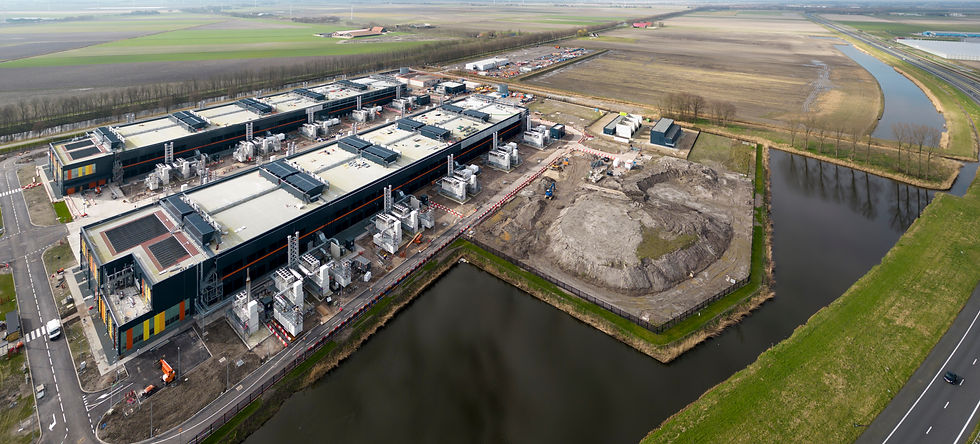
Data center power infrastructure is what allows modern facilities to operate with the uptime, resilience, and scalability they require. From utility service and switchgear to UPS systems, generators, and final distribution, every piece of the system plays a role in protecting continuous operation.
As facilities become more power-dense and more complex, infrastructure design becomes even more important. It is not just about getting power into the building. It is about managing, protecting, and delivering that power in a way that supports long-term performance.


