Why Flexible Power Strategies Matter in Data Centers

Data centers demand continuous power availability, but not every operational reality can be solved by fixed, permanent infrastructure alone. To survive unpredictable environments, facilities must strike a delicate balance between absolute reliability, operational flexibility, and seamless scalability. While permanent infrastructure acts as the baseline shield for the facility, temporary power plays a vital, strategic role during equipment maintenance, physical expansion, and unexpected emergencies.
At Enercon, we specialize in developing flexible, mission-critical power architectures that safely integrate temporary assets into permanent downstream systems without risking critical uptime.
What Are Temporary Power Solutions in Data Centers?
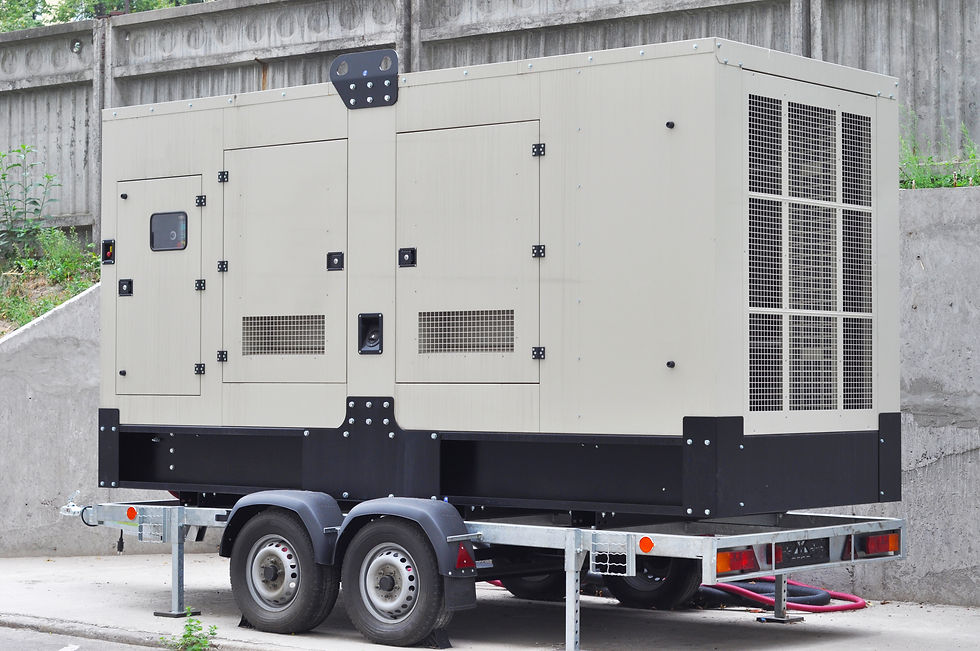
Temporary power solutions in data centers refer to portable or supplemental power systems, such as mobile generators, used to maintain operations during outages, maintenance, or infrastructure transitions.
These systems are not a fixed part of the day-to-day building infrastructure. Instead, they are deployed as needed to handle localized grid strain, system testing, or emergency shortfalls. Temporary power strategies typically rely on highly maneuverable mobile power packaging and rapid-connection interfaces to safeguard facilities during periods of high vulnerability.

What Are Permanent Power Systems in Data Centers?
Permanent power systems are built-in infrastructure components that continuously supply and manage electricity within a data center, including utility connections, UPS systems, generators, and distribution networks.
These fixed systems are always active or sitting in immediate electronic standby. They are engineered for decades of long-term operation, continuous load management, and automatic fault isolation. The core of a permanent layout is formed by robust upstream and downstream power distribution setups that ensure electricity moves smoothly from high-voltage utility entry points down to individual server racks.
Key Differences Between Temporary and Permanent Power
Rather than competing against one another, temporary and permanent power function as complementary layers of a comprehensive data center resilience strategy:
Feature | Temporary Power Solutions | Permanent Power Infrastructure |
Deployment | Deployed rapidly on an as-needed basis | Permanently anchored and integrated into the facility |
Hardware Form | Mobile, trailer-mounted, or external systems | Fixed, structural indoor/outdoor infrastructure |
Primary Focus | Short-term scenarios and transition windows | Continuous, uninterrupted baseline operation |
Key Advantage | High operational flexibility and modular scalability | Maximum structural stability and automated reliability |
When Data Centers Use Temporary Power
There are several critical operational windows where a data center must look beyond its permanent infrastructure:
Maintenance and Upgrades: When performing required lifecycle service on primary medium-voltage switchgear, transformers, or permanent standby generators, a facility can bring in mobile power to hold the redundant load. This ensures the IT floor maintains its full fault-tolerant posture during the maintenance window.
Emergency Situations: If an unexpected disaster damages fixed outdoor enclosures or primary utility pathways, temporary mobile generators can bridge prolonged infrastructure gaps.
Capacity Expansion: During facility expansions, a data center may face temporary shortfalls before local utilities complete final high-voltage grid upgrades. Supplemental power can support early validation and hardware staging.
Testing and Commissioning: Bringing an entirely new facility online requires massive electrical validation. Temporary power assets allow teams to execute full-scale system load-testing and commissioning before placing live client data at risk.
Role of Generator Docking Stations in Temporary Power
The bridge between mobile assets and fixed facility infrastructure is the generator docking station. These permanently installed, code-conscious connection interfaces allow heavy-duty mobile generators or external load banks to link directly into the building's electrical core.
By eliminating the need for electricians to perform dangerous manual field-wiring during a crisis, a dedicated docking station reduces deployment downtime from hours to minutes. Utilizing a standardized connection panel built to rugged UL 891 integrated docking station safety standards provides a fast, repeatable, and completely safe access point for external power generation assets.
Benefits of Temporary Power Solutions
High Flexibility: Allows operations teams to adjust the facility's power layout to support temporary, high-demand workloads without over-building the fixed structure.
Granular Scalability: Provides a mechanism to scale up localized generation capacity dynamically as data center blocks are built out over time.
Reduced Downtime Risk: Acts as an immediate backup layer during complex facility switchovers or physical infrastructure expansions, ensuring continuous, seamless operations.
Benefits of Permanent Power Infrastructure
Absolute Reliability: Engineered to be instantly available via automated control pathways without logistical delay.
Deep System Integration: Completely synchronized with localized low-voltage switchgear assemblies, backup UPS battery banks, and automatic transfer switches (ATS).
Long-Term Operational Stability: Built explicitly to withstand continuous thermal loads, specialized high-density computing trends, and rigorous lifecycle testing over decades.
Challenges of Temporary vs. Permanent Power
Balancing these two systems requires acknowledging distinct real-world limitations:
Temporary Power Challenges: Deploying mobile power introduces notable logistical hurdles, including over-the-road transport times, strict emissions compliance, on-site footprint constraints, and active fuel management during extended outages.
Permanent Power Challenges: Structural infrastructure requires massive initial capital expenditure, an extensive physical construction footprint, and offers limited flexibility to alter layout designs once switchgear and concrete pads are poured.

How Data Centers Combine Both Strategies
Modern hyperscale and enterprise facilities use a hybrid approach to maximize resource efficiency. The permanent infrastructure handles the data center's baseline operations, baseline redundancy, and instantaneous failover demands. Simultaneously, the temporary framework stands ready to step in during high-risk lifecycle transitions, planned load tests, or severe equipment updates.
By utilizing modular designs that embed permanent switchgear retrofit readiness and physical generator docking hubs directly into the building's exterior footprint, modern data center spaces ensure that they are completely adaptive to both predictable baseline requirements and unforeseen emergency realities.
The Future of Flexible Power Infrastructure
Power infrastructure is evolving to become increasingly dynamic. Moving forward, the industry is transitioning toward fully modular microgrids, containerized power blocks, and intelligent, on-demand generation assets. This allows modern data center facilities to dynamically flex their power intake, blending utility, on-site backup storage, and external mobile generation arrays into a singular, resilient energy posture capable of addressing the processing requirements of tomorrow.
FAQs About Temporary and Permanent Power
What is temporary power in a data center?
Temporary power refers to supplemental or mobile electrical systems, such as trailer-mounted rental generators and transportable load banks, brought on-site temporarily to supply electricity during structural maintenance, testing, or grid failure.
Why do data centers use temporary generators?
Facilities deploy temporary generators to absorb electrical loads during planned utility cutovers, switchgear service, or facility expansions. They serve as a vital temporary safety net, maintaining full redundant capacity when fixed components must be taken offline.
What is the difference between temporary and permanent power systems?
Permanent systems are fixed, built-in structural assets (like core UPS rooms and pad-mounted utility feeds) designed for continuous facility baseline use. Temporary systems are transportable, external components integrated temporarily through external hookups.
Are temporary power solutions reliable for data centers?
Yes. When temporary generators are introduced into a facility utilizing high-quality, pre-engineered connection platforms and integrated transfer switch arrays, they deliver identical utility-grade power reliability to fixed onsite equipment.
How do generator docking stations support temporary power?
Docking stations provide a pre-wired, permanently mounted connection interface equipped with standardized connectors. This allows mobile power generators to plug directly into the building distribution spine safely, efficiently, and without complex manual wiring.
Partnering for the Future of High-Density Infrastructure
The move toward flexible data center operations is inevitable, but the path to a reliable, scalable facility is paved with complex engineering decisions. As modern high-performance computing continues to push the boundaries of traditional power distribution design, you need a partner who understands the delicate equilibrium between fixed infrastructure and temporary power deployments.
At Enercon, we don't just provide components; we deliver integrated solutions designed for the most demanding mission-critical environments. From custom switchgear that handles massive amperage to backup systems engineered for instant resiliency, we help you navigate the transition from legacy layouts to the adaptable, future-proof hubs of tomorrow.
Ready to future-proof your facility? Learn how Enercon supports flexible power strategies that combine permanent infrastructure with temporary solutions to ensure continuous uptime.