
Year-End Review: Power Trends That Shaped 2025—and What’s Coming for 2026

The transition into the new year is a good time to reflect on the 12 months that just passed and the next 12 ahead. In our field, the past year has been a whirlwind of growth and innovation. From the incorporation of renewables and the fundamental modernization of grid infrastructure, to the phenomenal increases in demand and greater customer expectations than ever in terms of performance, reliability, and efficiency.
With very significant investment in facilities such as data centers and the necessity for overall power transmission infrastructure to be overhauled, there have been great opportunities for electrical engineering firms to both expand and to embrace new tech as it becomes available.
Here we’ll take a look at some of the biggest power trends that shaped 2025 and look to the future in terms of what to expect for 2026.
What Was Big in 2025
AI and Data Center Demand
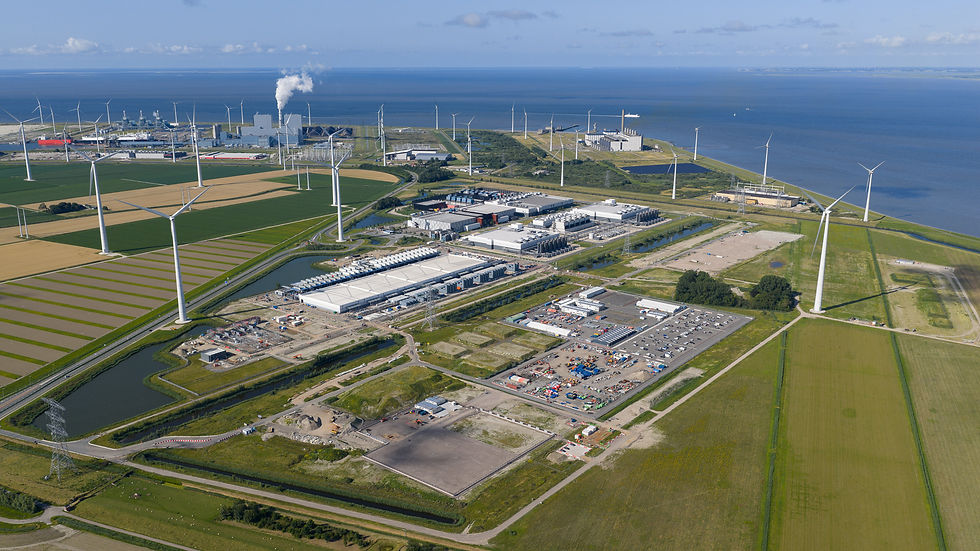
The massive surge in demand for data centers, and lately the AI models that use them, has driven very significant capital expenditure on these highly energy-intensive facilities. So much so that researchers at MIT have found data centers in 2025 account for 4.4% of US electricity usage, a number which could nearly triple to 12% by 2028. AI alone is predicted to use as much electricity as 22% of US households by 2028.
This incredible increase in demand has created both obstacles and opportunities for electrical engineering. On the one hand there are the risks of electricity shortages and increased demands on aged infrastructure. On the other hand, however, these huge and intensive projects are driving significant investment in improved efficiency and optimization on a scale not possible with residential energy supplies.
Wide-Bandgap Semiconductors
There have been advances across the spectrum in electrical engineering, and one of the most significant for the modern world’s tech stack growth is the evolution of wide-bandgap semiconductors, in particular the use of gallium nitride (GaN) and silicon carbide (SiC) technology. These had long been theorized as potential solutions in different settings, with GaN excelling at lower-voltage, high-frequency applications and SiC at higher-voltage, higher-power applications, but 2025 has been a year where they really became mainstream.
Costs are still higher than silicon counterparts, but they are coming down as the technology becomes more widespread. GaN and SiC offer significant efficiency improvements over silicon, leading to less heat and energy loss and enabling lighter-weight systems and more efficient power supplies.

Cybersecurity Concerns
While a common issue in many industries, electrical engineering had been relatively unscathed by the huge cyber attacks affecting hotel groups, airlines, and financial institutions. This has begun to change recently and certainly became a major feature for electrical engineering companies in 2025. Hardware security vulnerabilities, compromised supply chains, and more niche side-channel attacks became major security issues costing hundreds of millions to firms in the field. Attacks included those on Schneider Electric and Emerson, which exploited zero-day vulnerabilities in Oracle’s E-Business Suite, and one on the Swedish state-owned power grid operator Svenska kraftnät.
With the recognized importance of data centers and power distribution as national infrastructure, firms must also put in place protections against state actors with both the desire to cause mass disruption and the resources to achieve it.
What We Can Expect in 2026
AI and Machine-Learning Integration
While it is the task of electrical engineers to build the facilities that make the growth in AI and machine-learning possible, these advances can in turn help engineers improve what and how they are building. In 2026 expect to see even greater interfacing between the power of LLMs, and specifically agentic AI trained on very specific datasets, to assist in answering some of the greatest challenges facing electrical engineers.
AI will not be commandeering the process any time soon, but it can be an excellent tool for running simulations and answering queries on past or current projects instantaneously, which can drastically reduce iteration times.
Materials Science and Thermal Management
New materials and packaging approaches are often discussed and being put in the pipeline by both startups and more established players. The industry needs to move forward and find power-efficiency gains that can match the advances in chip speed if data centers are to be kept at any reasonable size, and those efficiencies could literally be anywhere. Adjustments to system architectures are also likely to come more into play, including three-dimensional heat-spreading architecture, direct-to-die cooling, and liquid cooling systems.
Along with power delivery, thermal management is up there with the most critical concerns of modern electrical engineers, and overcoming that challenge could be a major turning point in the data and AI revolution, even if it will still go largely unheralded by those outside the industry.
Grid Modernization Accelerates
The greater demand for energy has greatly opened up the adoption of distributed energy resources (DERs), microgrids with multiple generation capabilities, and the greater incorporation of renewables and battery storage systems into facility energy planning. The grid itself is also being forced to evolve from a one-directional system into a complex network that requires real-time and ahead-of-time control.
Advanced control algorithms and fast-acting interfaces will increasingly enable the greater integration we need to meet demands, while critical moments such as achieving standardization for electrical infrastructure equipment can improve grid stability and resilience while also significantly enhancing our ability to collaborate across municipal and federal agencies, local utilities, and contractors on-site.

Conclusion
It’s been a wild few years in the world of power production and distribution, and 2025 was no different, with a number of long-awaited advances moving from the bleeding edge into the mainstream. 2026 promises to be more of the same, and we can expect even greater upheaval with things we could only imagine five years ago steadily becoming commonplace.
At Enercon we’ve been around a long time because we believe in building our business with an eye on the future backed up by the knowledge we’ve gained in the past. It’s no different now as we embrace the great changes happening in our industry. To find out more about how we can deploy the latest advances for your next project, get in touch with us today.


